Week 23
Question 1 – written assignment
1 – Name three lighting sources and their functions.
Flashguns -also known as speed-lights- are external flash units employed by the photographers. These battery-powered flash units are mounted to the hot shoe or can be used off-camera by attaching them to the slave units. The sole purpose of the external flashes is to boost the flash-range of on-camera flash.
Head and power packs consist of a flash and a small power pack that acts as the generator for operating the flash light. You can attach multiple flash heads to a single power pack, and all these flash heads are comfortably controlled by the controls & knobs provided on the power pack itself.
A monolight is a portable photographic flash lighting unit which has its own independent power source. Unlike a head and power pack kit, it does not depend on a centralized power supply. Each monolight has its own power settings and light output.
2 – Name two light modifiers and explain the difference between them.
Umbrellas are one of the basic lighting equipment found in any basic lighting kit. Photographers use these reflective umbrellas as a diffusion device which soften and evenly spread the light over a larger area. The strobe light is mounted to the umbrella in such a way that the light hits the inside of the umbrella and bounces back to the subject with soft light and even illumination.
A softbox is also used for softening and diffusing the light. They come in varied shapes and sizes, but the most basic consists of a reflective surface surrounded by a diffuser. The flash head is fitted in such a way that the light falls on the reflective surface, passes through the translucent diffuser and produces a controlled soft light.
The difference between the two is that the light coming out of the softbox is more controlled and doesn’t spill elsewhere as it happens with umbrellas.
3 – Draw a diagram of and describe the three-point lighting setup.
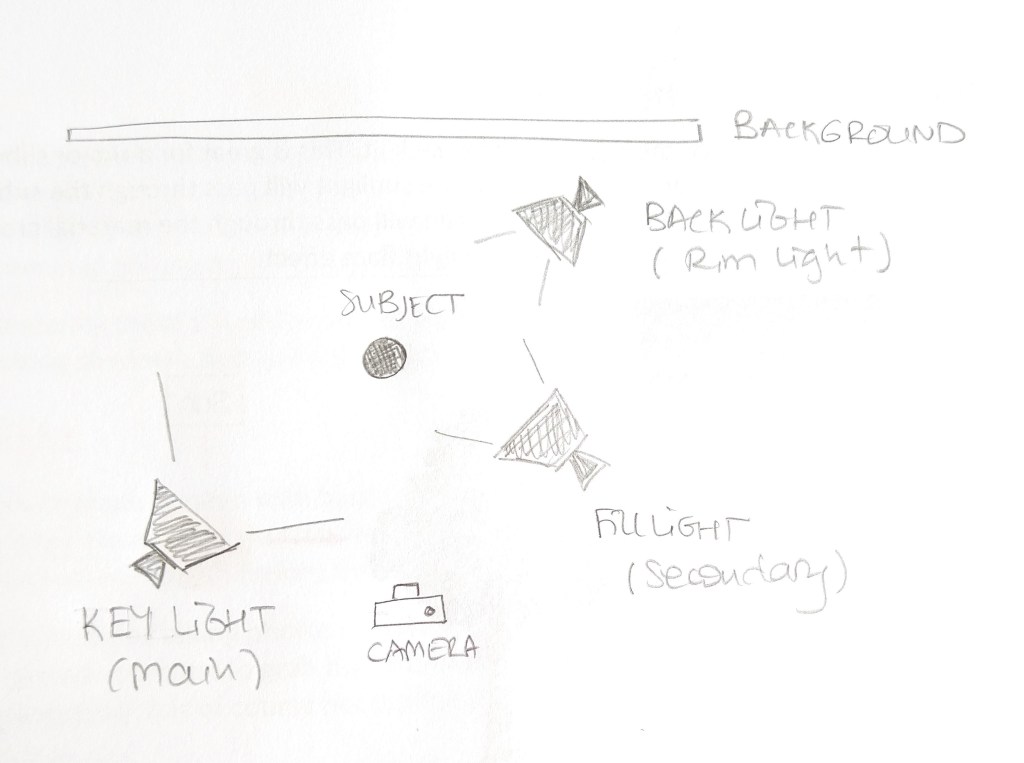
3-point lighting setup
The key light is the main source of light that is positioned to light up the subject. It’s often the brightest light and plays a great role in determining where the highlight and shadow area in your photograph would be. It is usually placed at a 45º angle to the camera, slightly above the eye-level of the subject and angles down towards them.
The fill light can also be called the secondary light. It aims to “fill in” dark shadows and help soften their intensity. The filling light is placed on the opposite side of the camera to the key light, usually at a 45º angle and a bit lower than the main light source. It’s normally half as bright as the key light (or even less) and can be adjusted depending on how intense you want the shadows to be.
The back light, also called the rim light, is placed opposite the fill light or key light, behind the subject to create a “rim” around the subject, by highlighting their hair and shoulders and separate them from the background.
Question 2 – Research assignment
1 – Draw three studio setups for the following subject matters and list all the equipment that you would use to light your subjects:
- Portrait
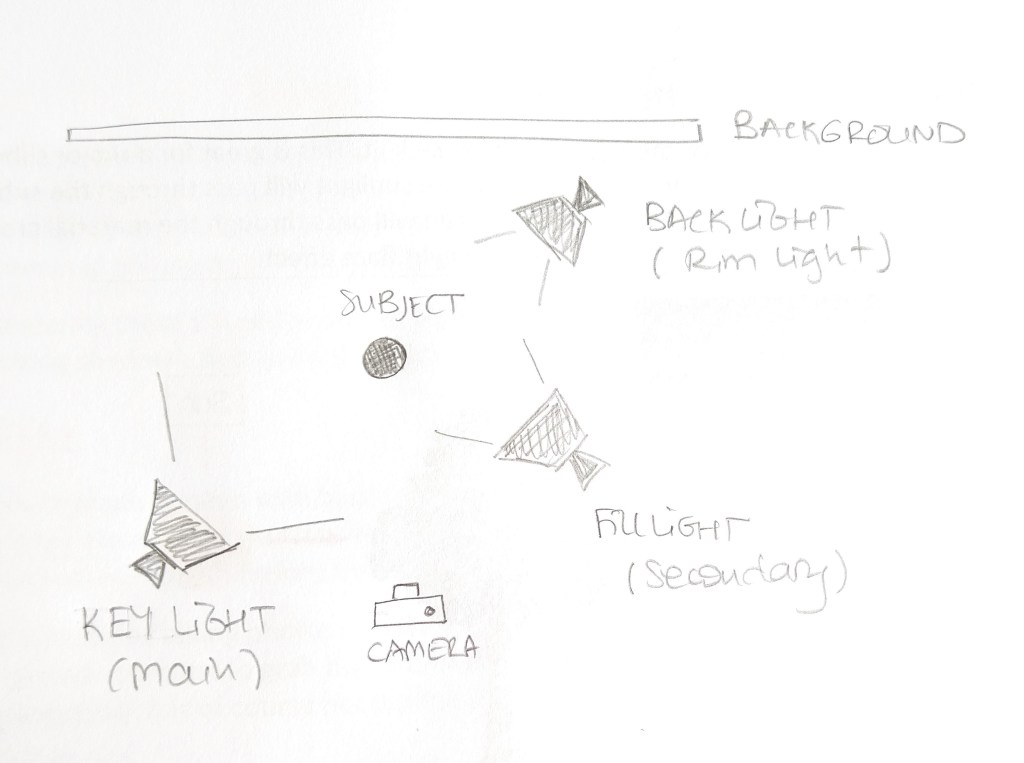
For a portrait photo I would use a 3-point lighting setup. A key light at a 45º angle a slightly above eye-level, a fill light in the opposite side at eye-level to avoid harsh shadows under the eyes and the chin. The main light is twice as bright as the secondary. Finally, and this is optional, I would add a back light to separate the subject from the background, in case it is needed.
- Fashion
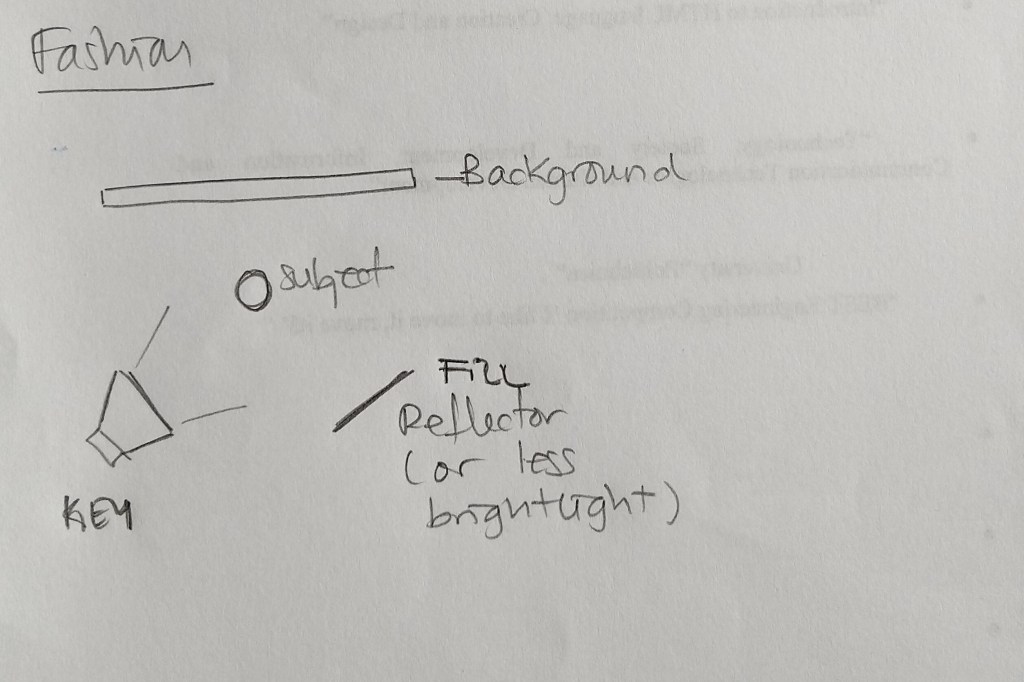
In case of a fashion shooting, I would use a key light at 45º on one side of the model and a quite lighter light (8:1 or 4:1 ratio) or a reflector on the opposite side of the subject to fill in some of the shadows but keep some contrast.
- Beauty
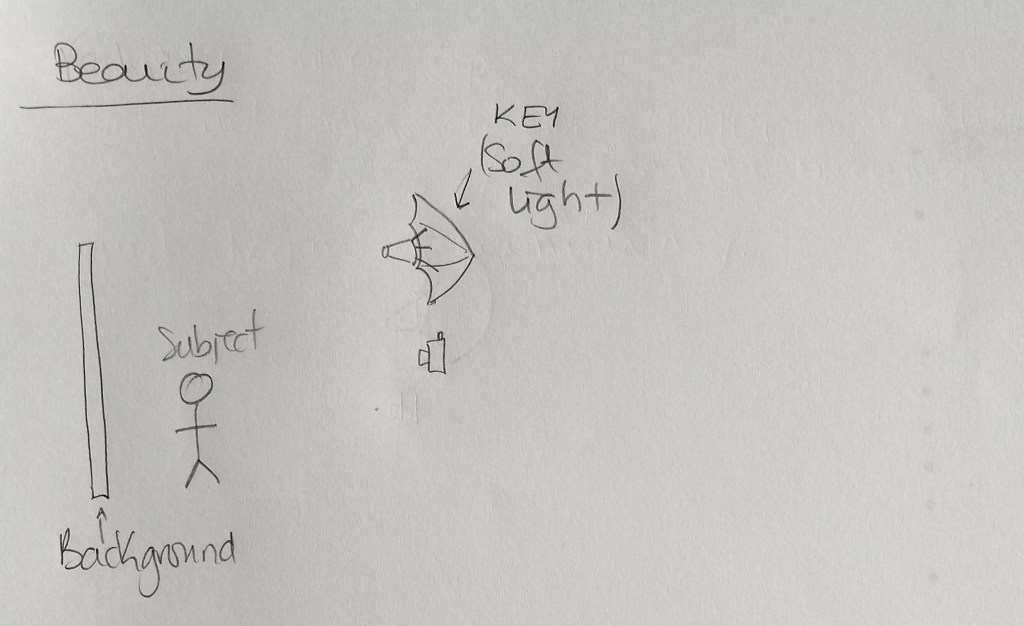
Beauty shots usually use front light to soften texture, wrinckles and skin imperfections. For that reason, I chose to have an umbrella reflecting the light right into the subject. This way, the light is soft and spreads nicely, illuminating both the subject and the background.
2 – In a magazine or on the Internet, find one fashion shot, a beauty shot and a portrait shot and explain how you think the lighting was set up in each shot.
- Portrait
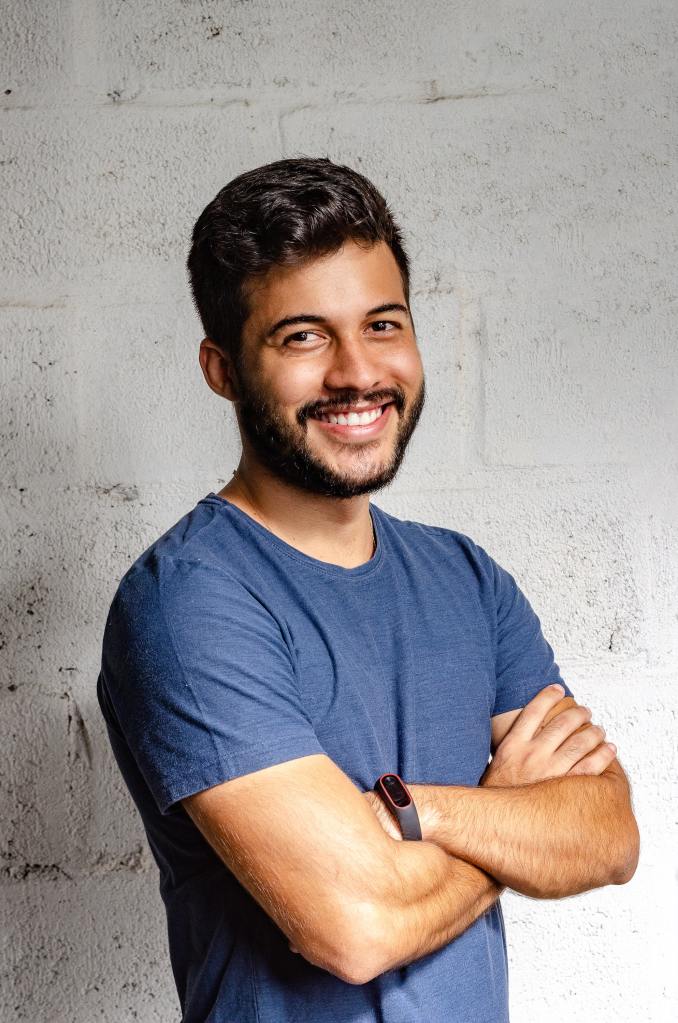
For this shot I think the key light was located to the left of the subject, probably at 45º. To soften the shadows on his right side, there is probably a secondary light or a reflector. I don’t think there is a back light, as the white wall would acts as a reflector.
- Fashion

Her shadow on the floor indicates there is a source of light coming from the model’s right side. There is probably a reflector to her left.
- Beauty
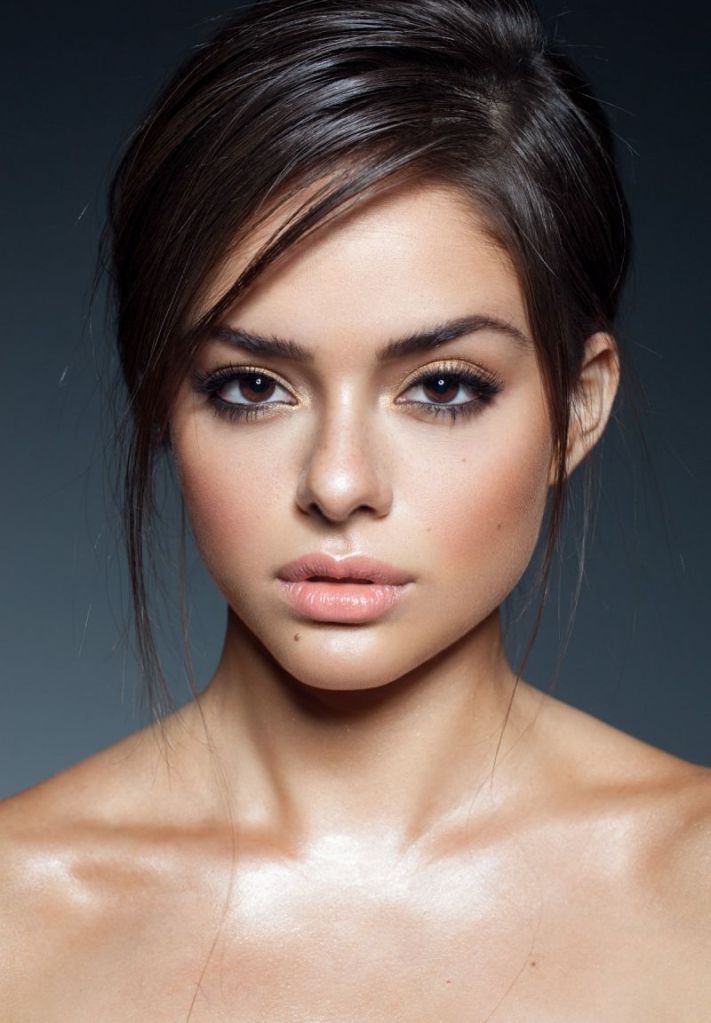
The highlights on the model’s nose and chest suggest the light is placed right in front of her. I believe there is also a back light, that separates her from the dark background.
Question 3 – Practical assignment
Take some portrait shots and pay specific attention to the lighting you use. I would like to see a shot with soft lighting and one with more dramatic, harder lighting. It would be beneficial to hire studio lighting, but if you can’t, you may use natural light, reflectors and your camera’s flash.
- Hard light
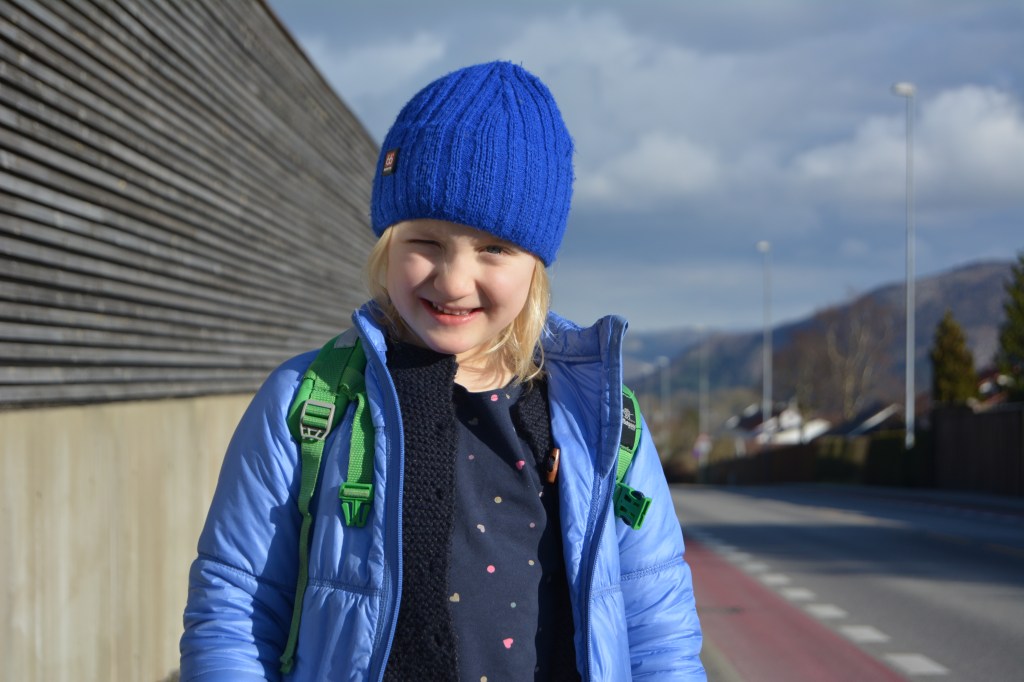
The sun is shining on the subject’s left side, creating harsh shadows on the right side of her face.
- Soft light

In this case, the sun is entering the window in front of the subject, but the white blinds that are pulled down act as a diffuser and thus the light is soft.
Sources:
– https://www.apnphotographyschool.com/equipment/an-introduction-to-studio-lighting-equipment/
– Photo by Italo Melo from Pexels
– Photo by Asa Dugger from Pexels
– https://www.slrlounge.com/beauty-fashion-photography-specifics-divide-great-mediocre/
 Mónica's Design Journey