The outcome of this Mandatory Assignment was the branding, packaging and presentation of a dog food product. It is a collection of the work from weeks 28 through 31 that I already posted here. Since I have changed a few details through the process, I decided to make a new post to collect all the products’ final versions. These have been some intense weeks, but I managed to complete all the tasks and have learned a lot while developing the brand.
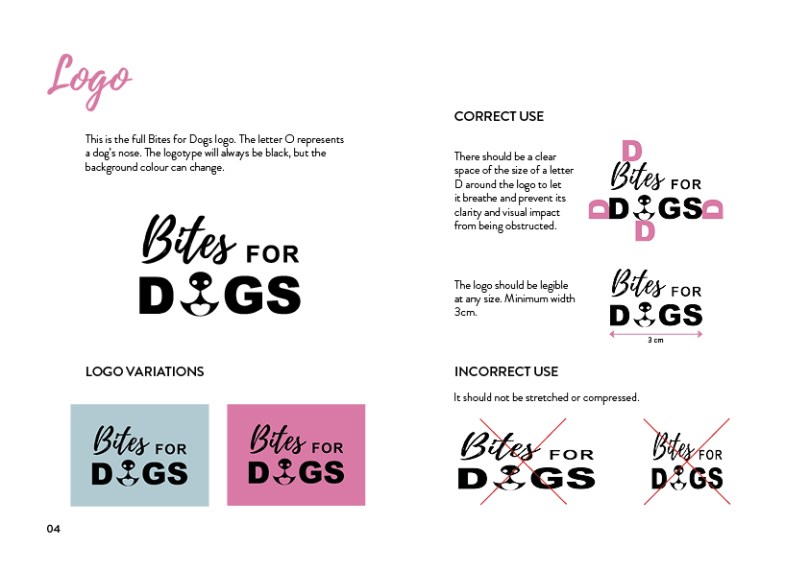
Brand name and logo
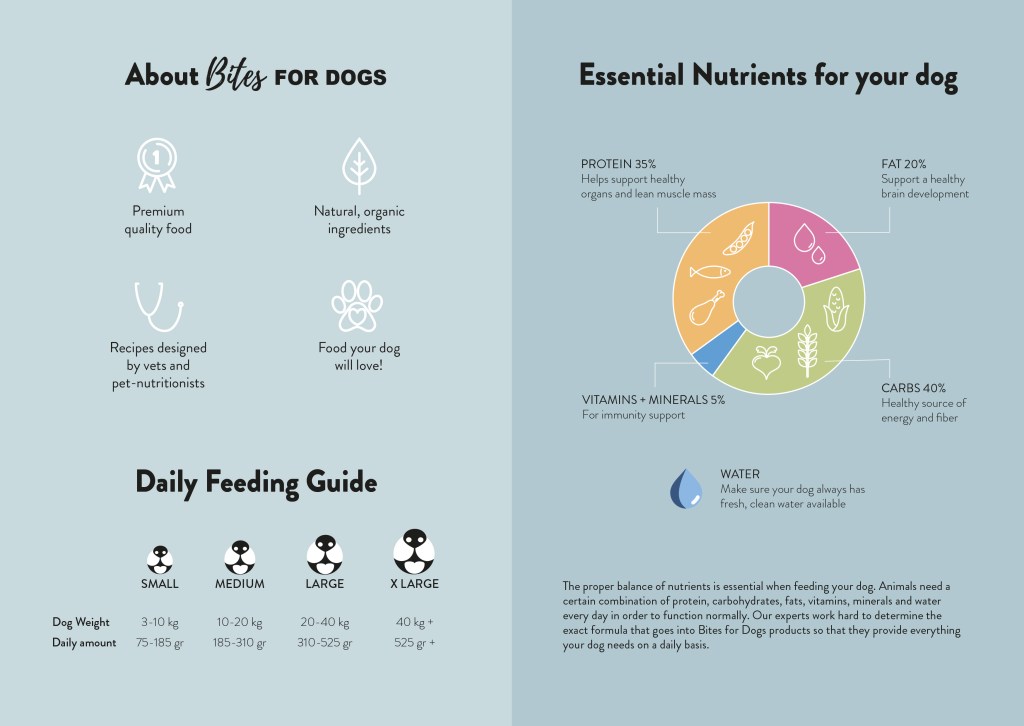
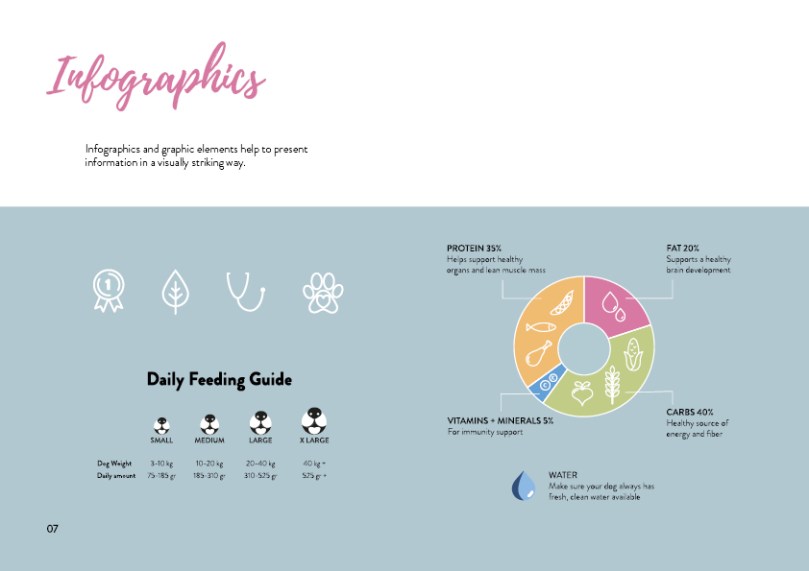
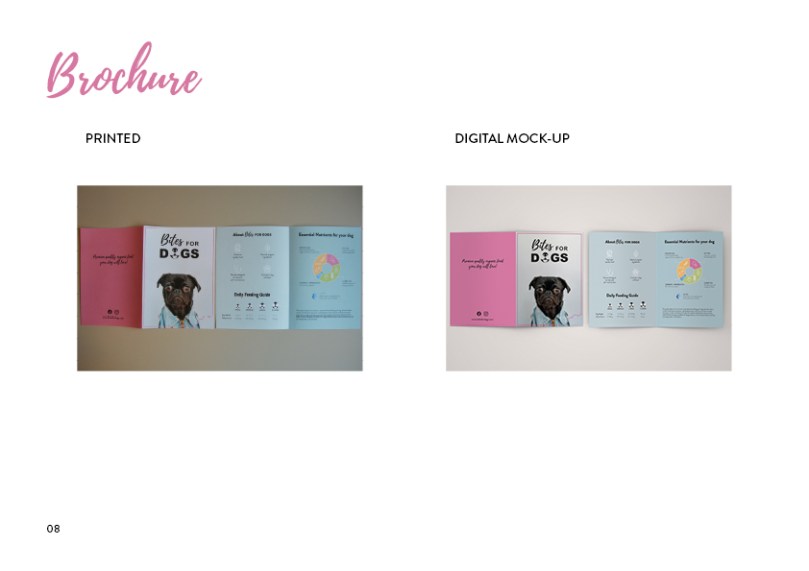
Illustrated infographic and brochure
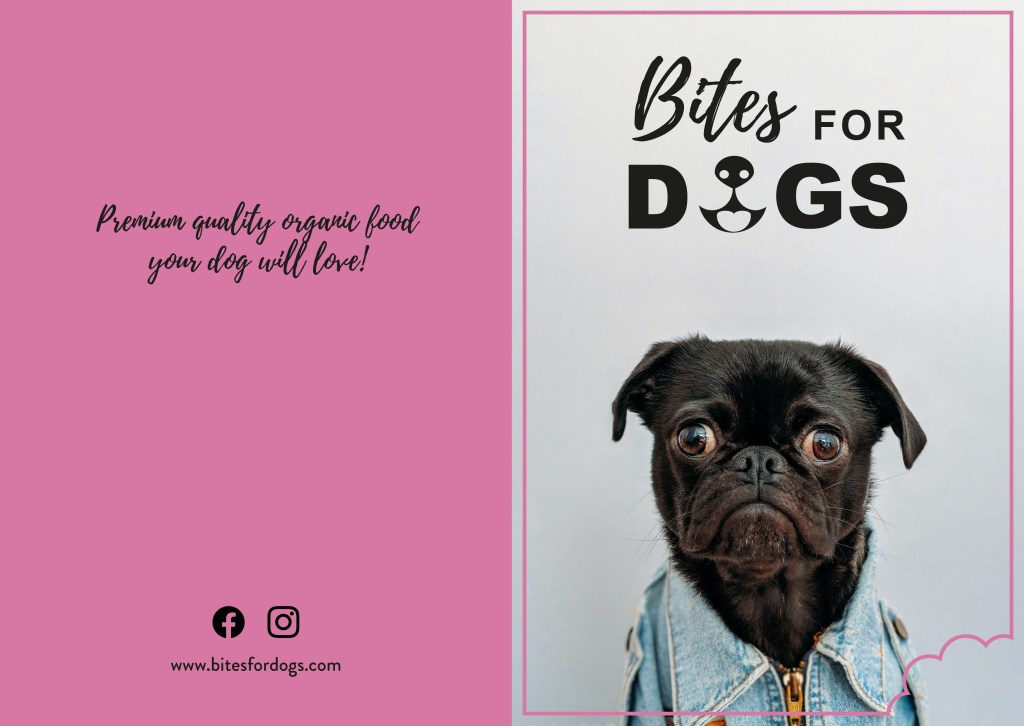
Outside
Inside
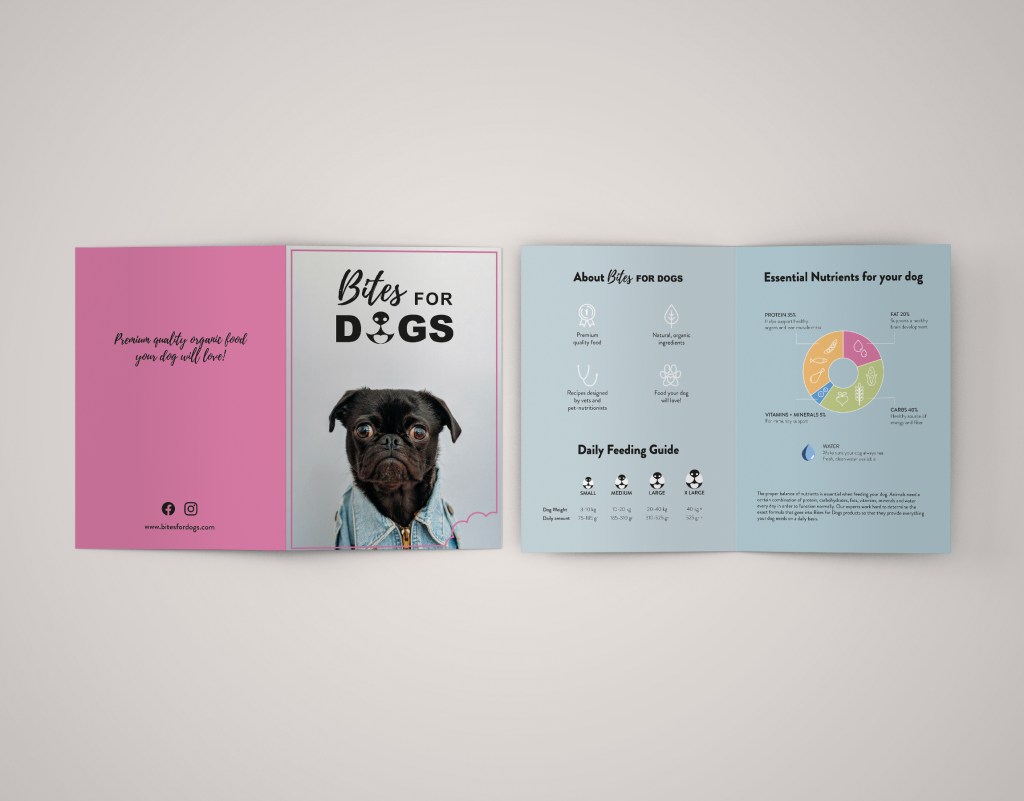
Digital mockup
Packaging (build a printed mockup and photograph it)
Using the logo you created in Week 1 and the brochure you designed in Week 2, think about your brand and design packaging for your product. Remember that you can decide about the detail of your product. Is it dog biscuits, meat products in a tin, dry pellets or a new and exciting product? Do your design according to the following steps:
1 – Exploration: Use sketching techniques to draw thumbnails and hand in your thumbnails as scanned PDFs.
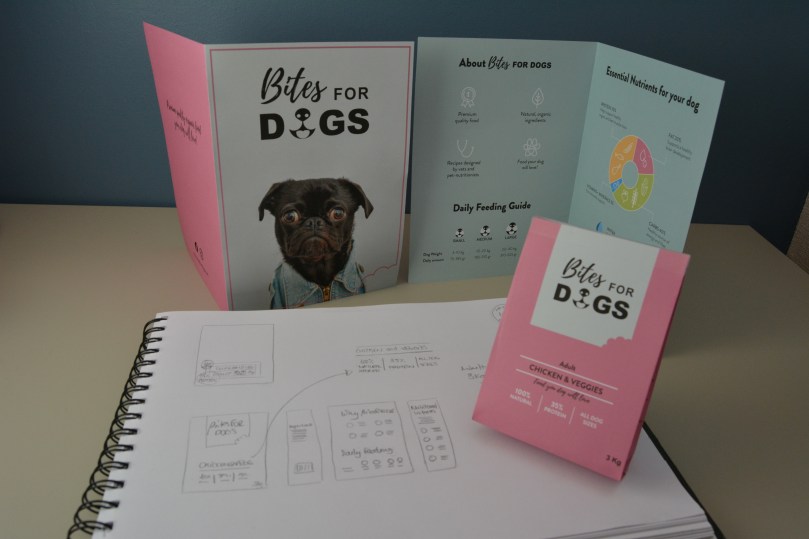
2 – Brand integration: Choose one of your thumbnails and refine your design. Place it next to your brochure and logo and see how you can merge your design with the brand identity. Also, what fundamentals of the brand can you draw from and use in your design? Hand in a picture of your thumbnails, mock-ups, logo and brochure together.
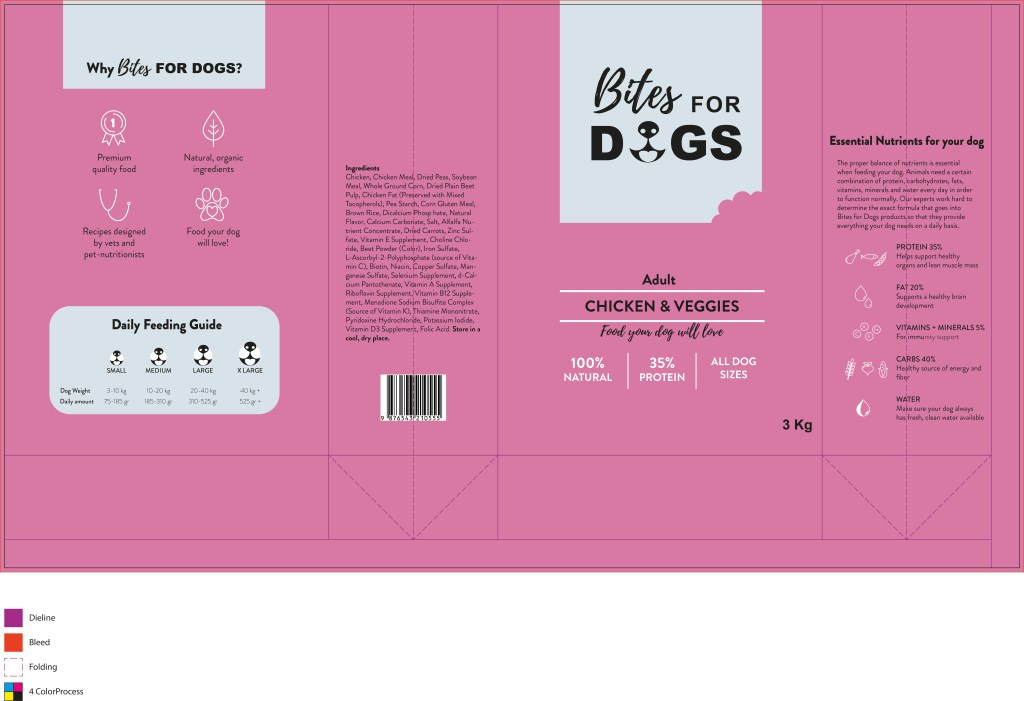
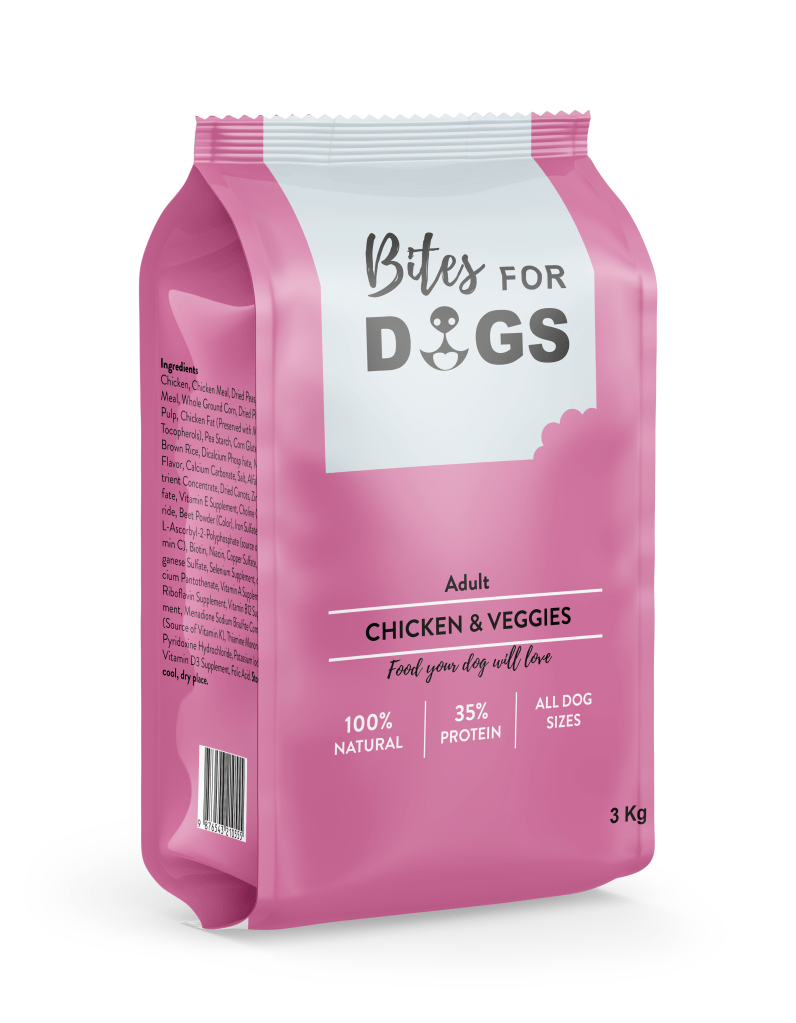
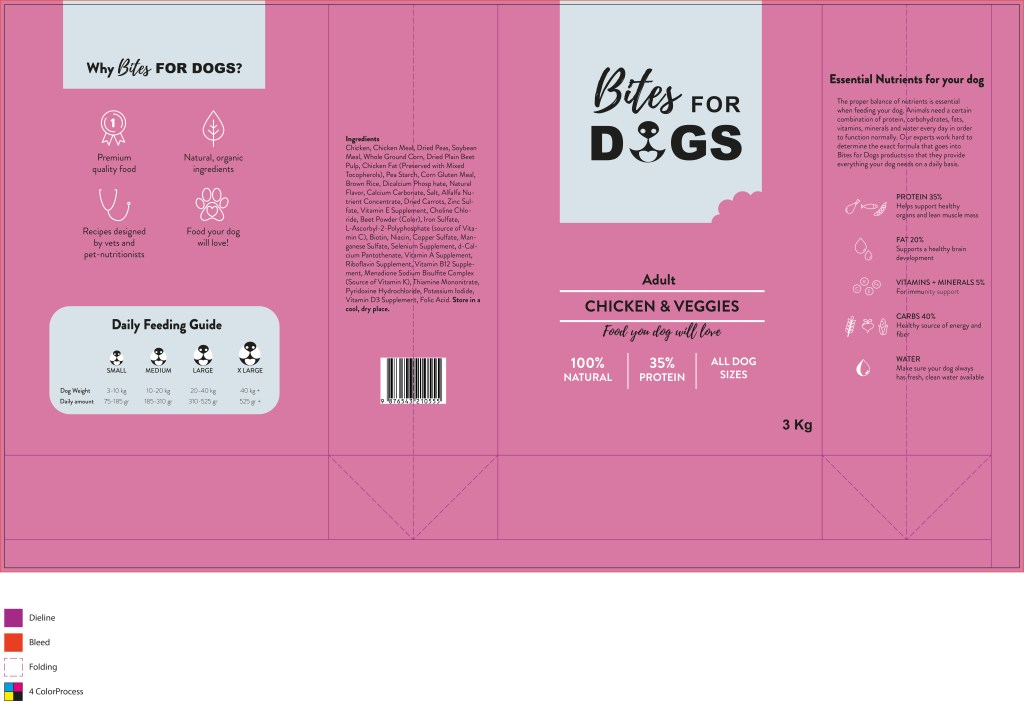
3 – Design: Now design your packaging properly, using any design application of your choice (or a combination of e.g. Photoshop, InDesign and Illustrator). Export the flat design as a PDF.
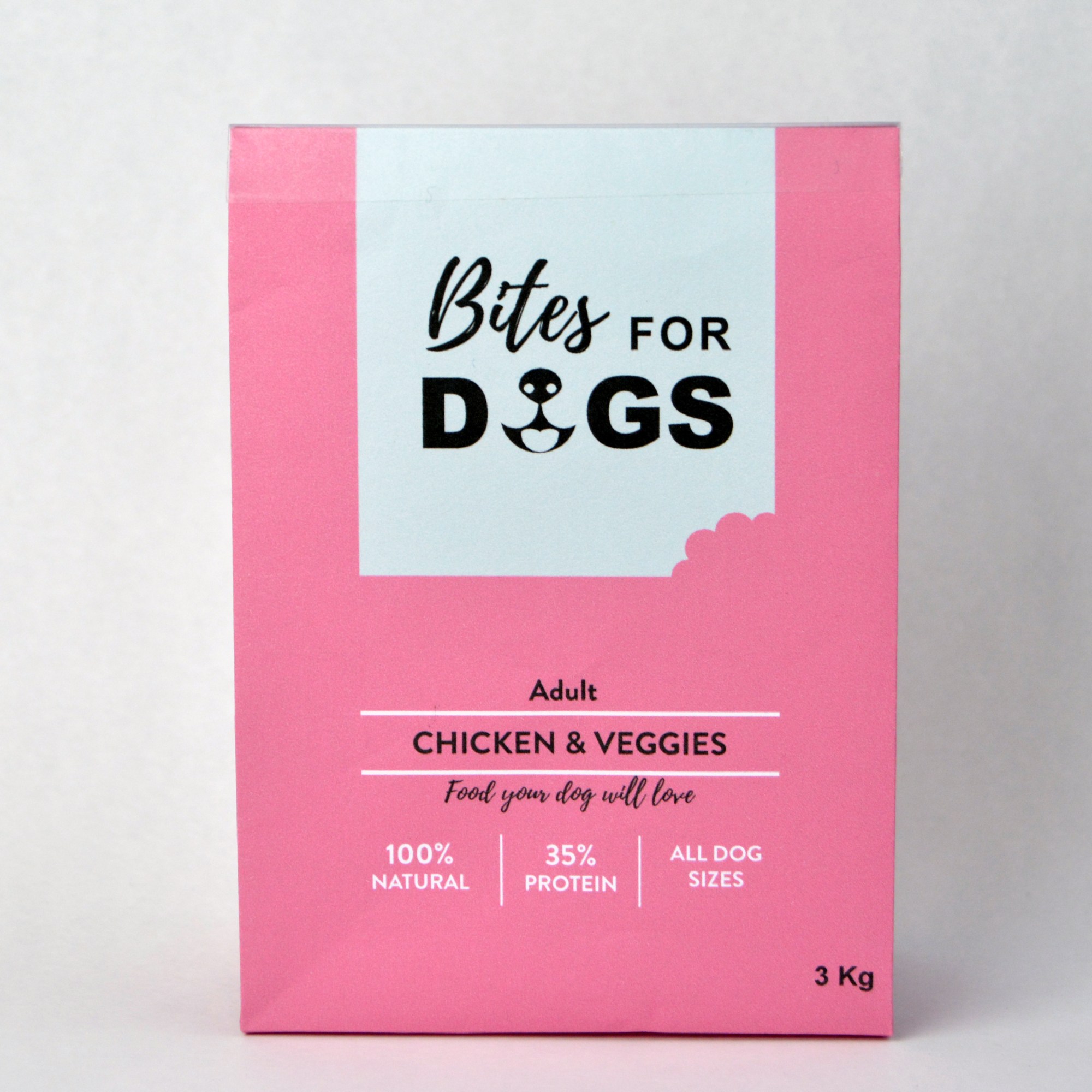
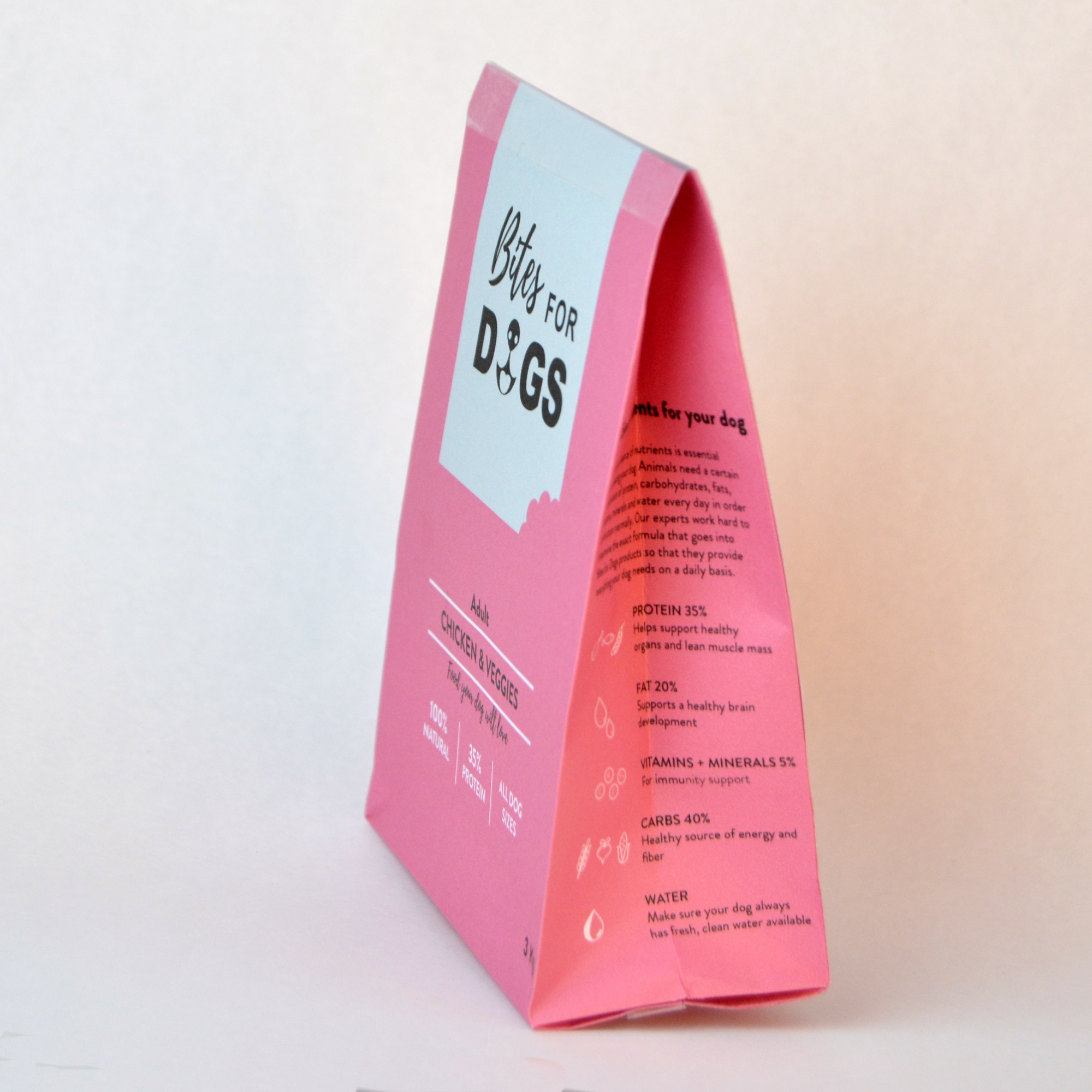
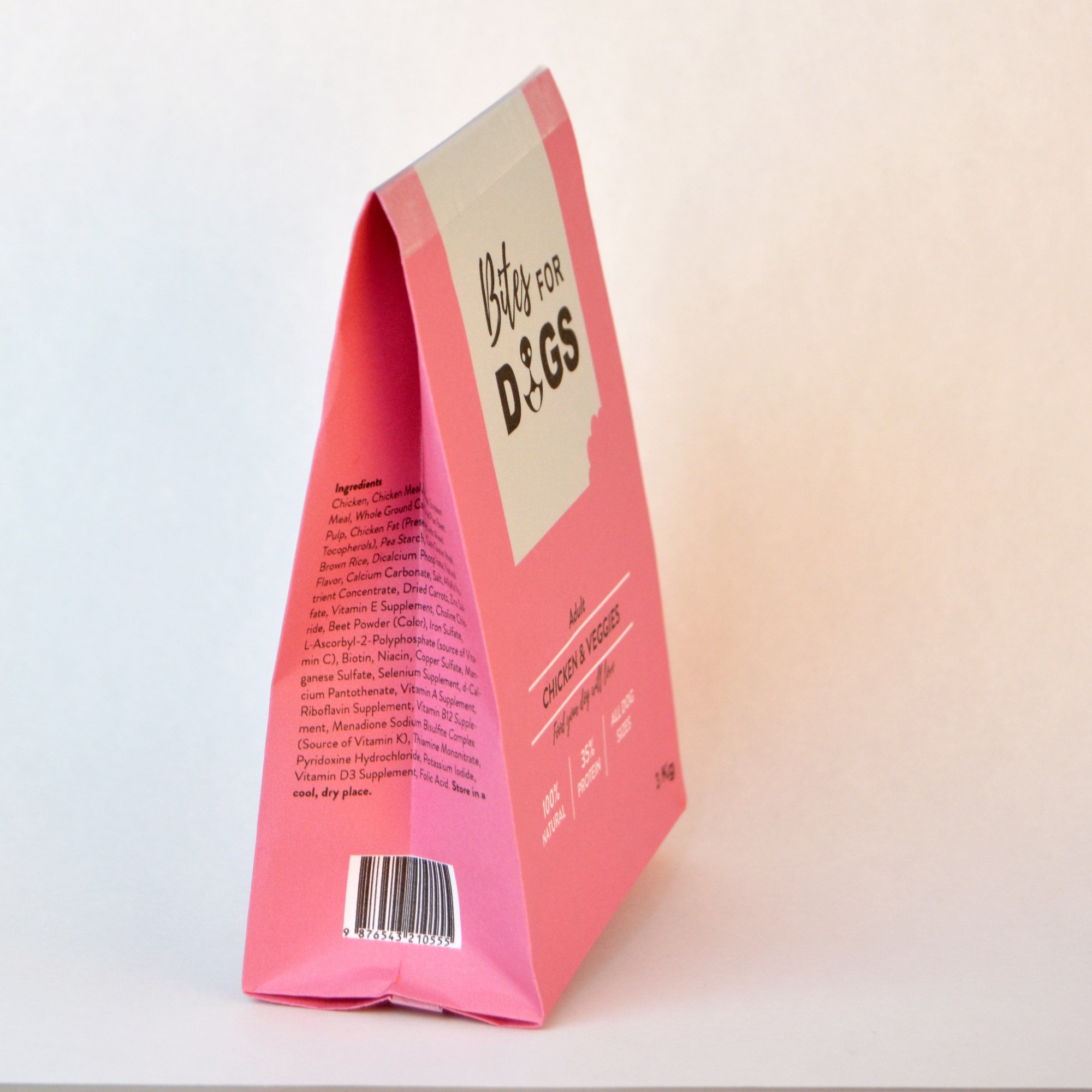
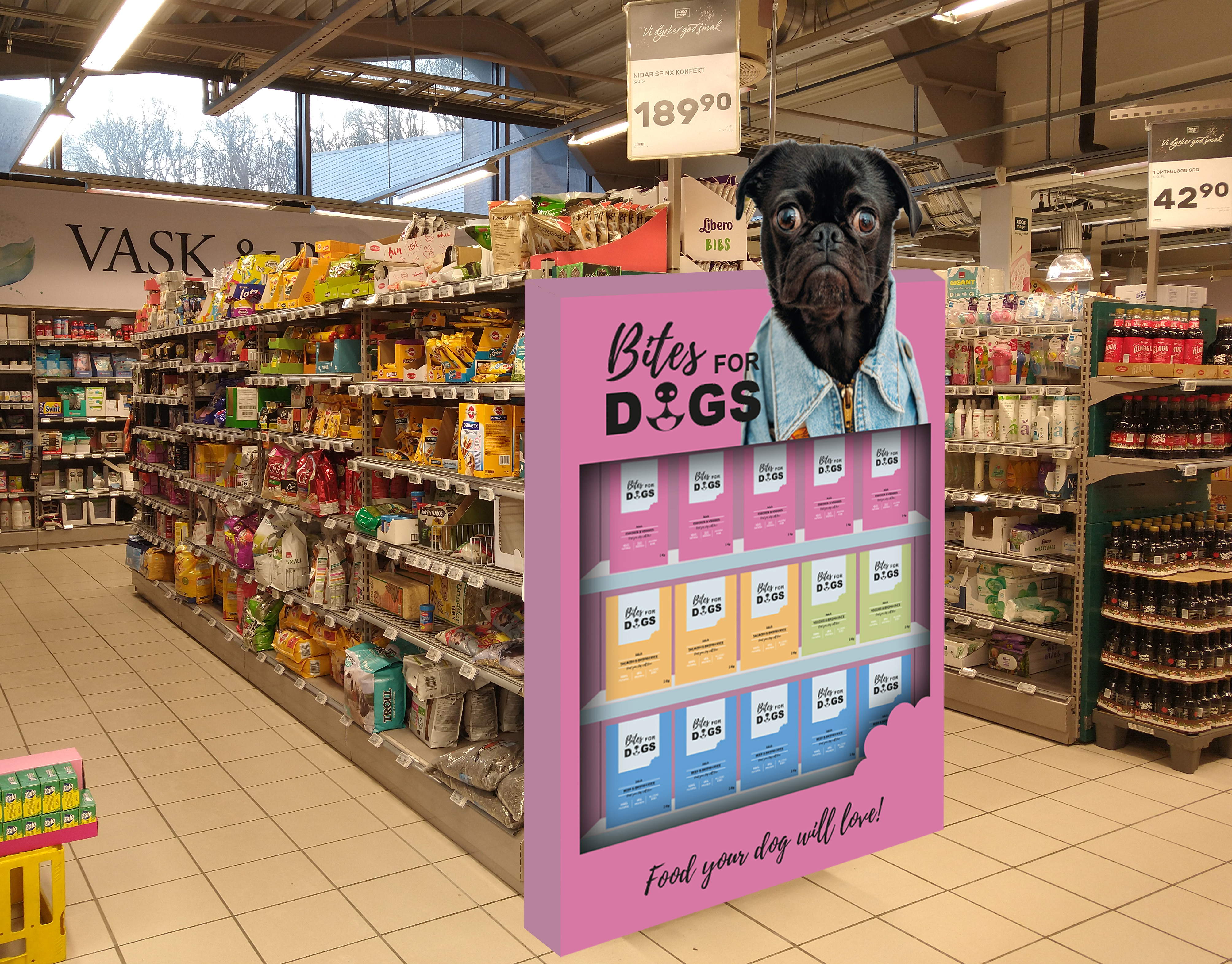
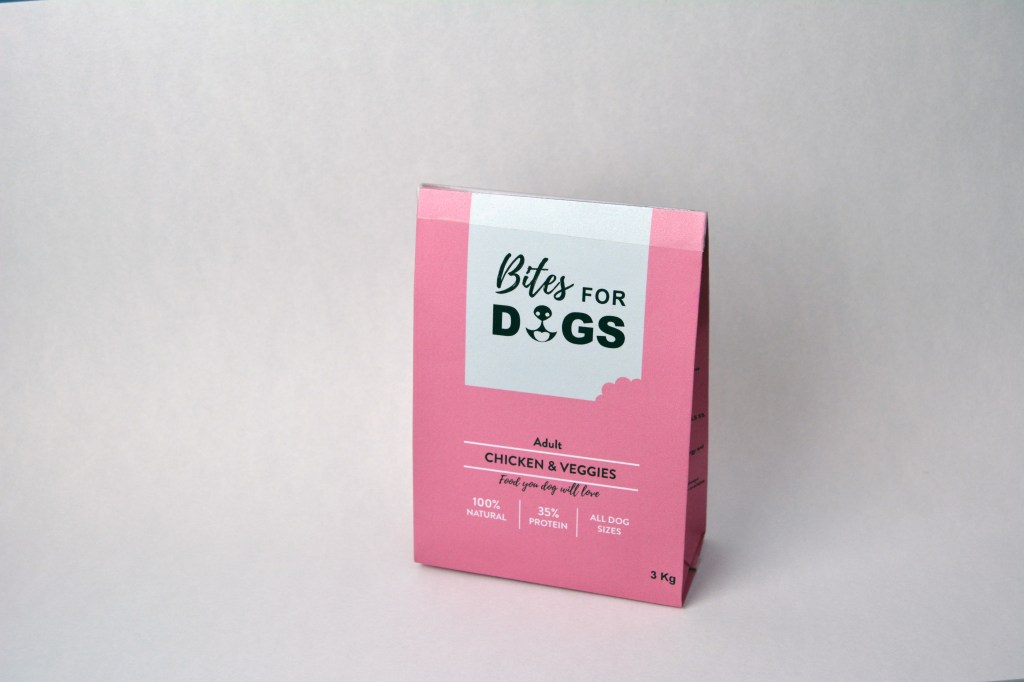
4 – Presentation: Make a life-size mock-up of your final design and take photographs of it. Remember that you can take more than one photo to show the different angles and sides of the packaging. Here your presentation skills are vital. How do you present the final mock-up in a photo to reflect the true essence of your design?
1 – Exploration
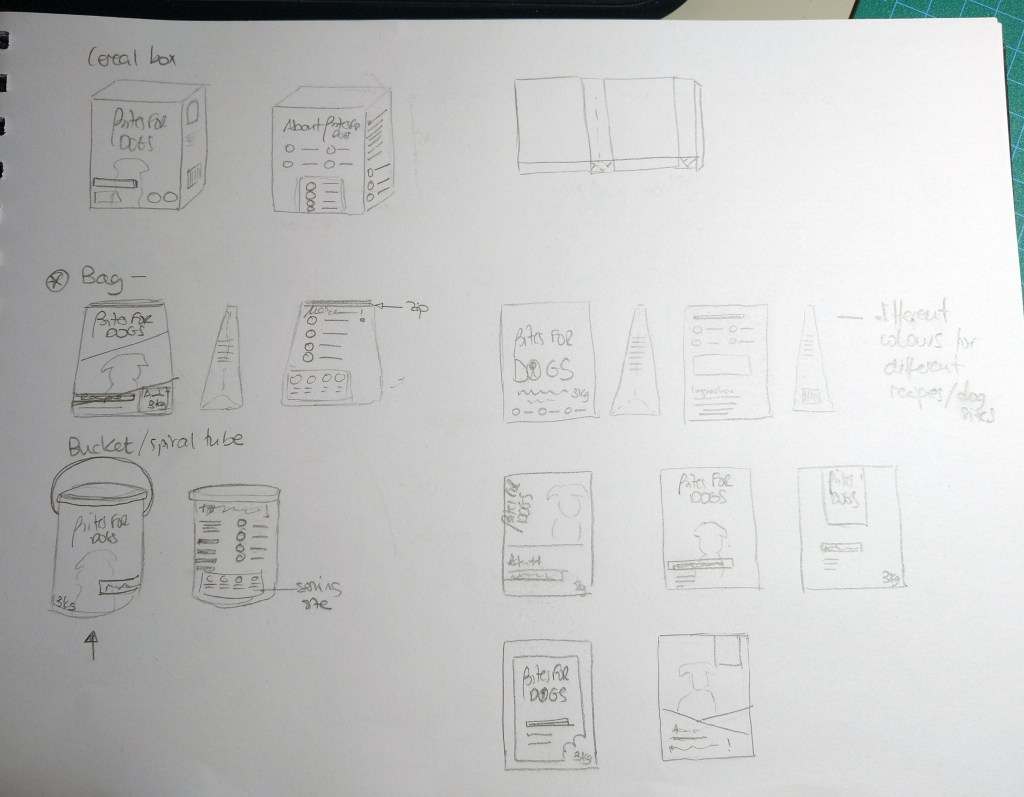
I began by sketching a few ideas for the packaging, considering different presentations: carton box, bag, bucket.
Fist sketches
2 – Brand integration
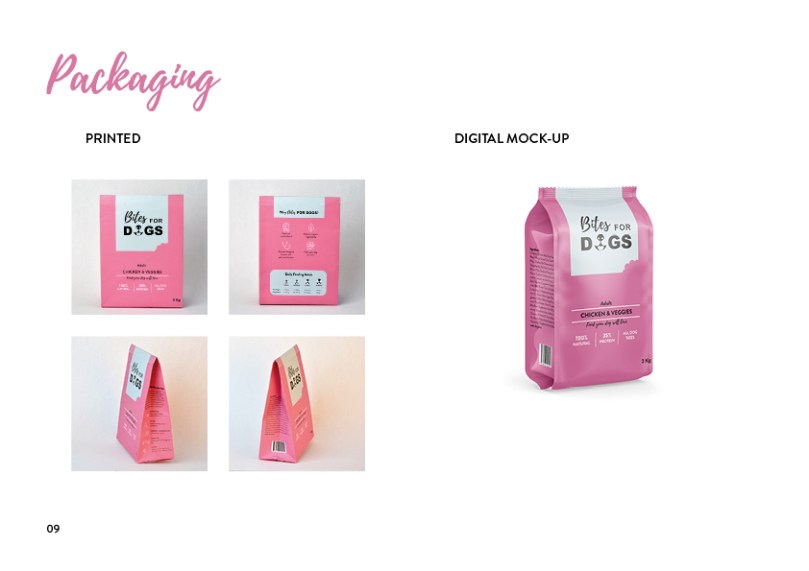
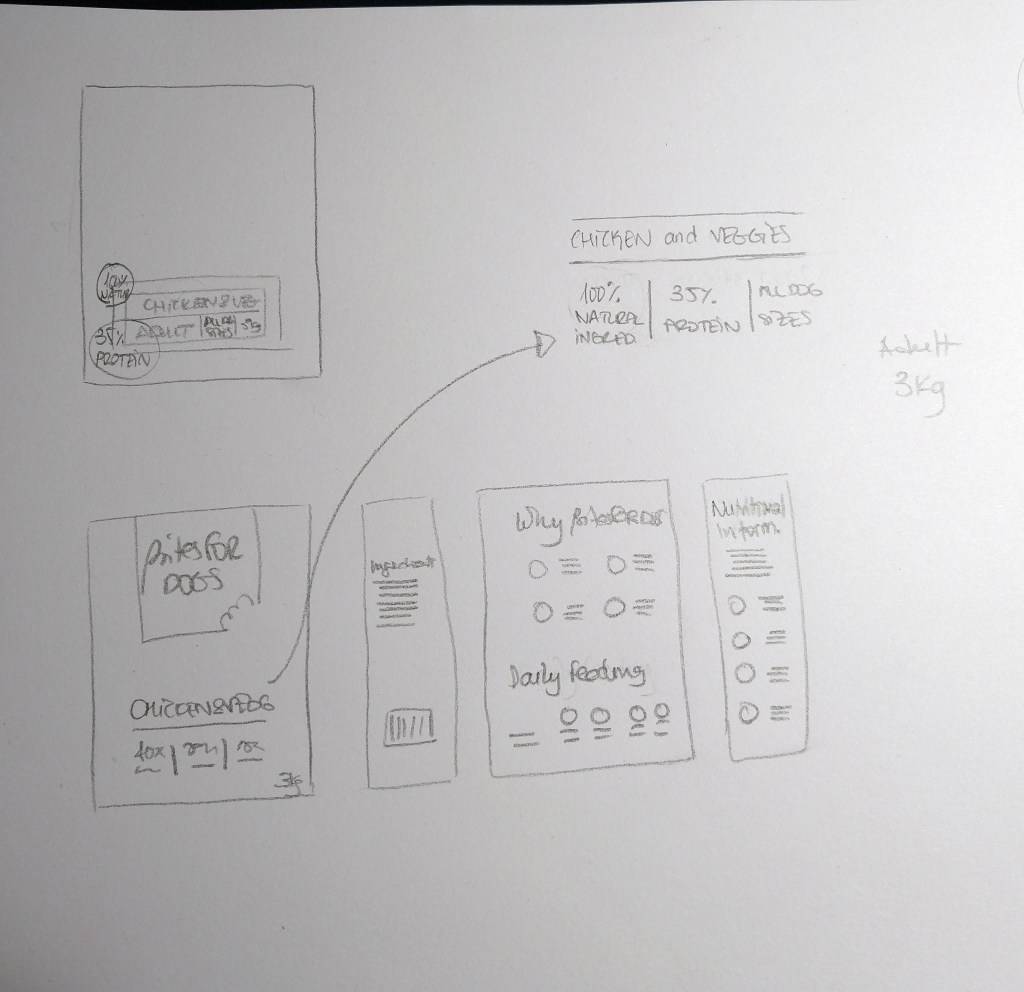
I decided to go for a bag. The product I chose to design is the packaging for dry dog food. I used the brochure and the logo designs from previous weeks to inspire the design, so the brand has a cohesive look.
Refined design
3 – Design
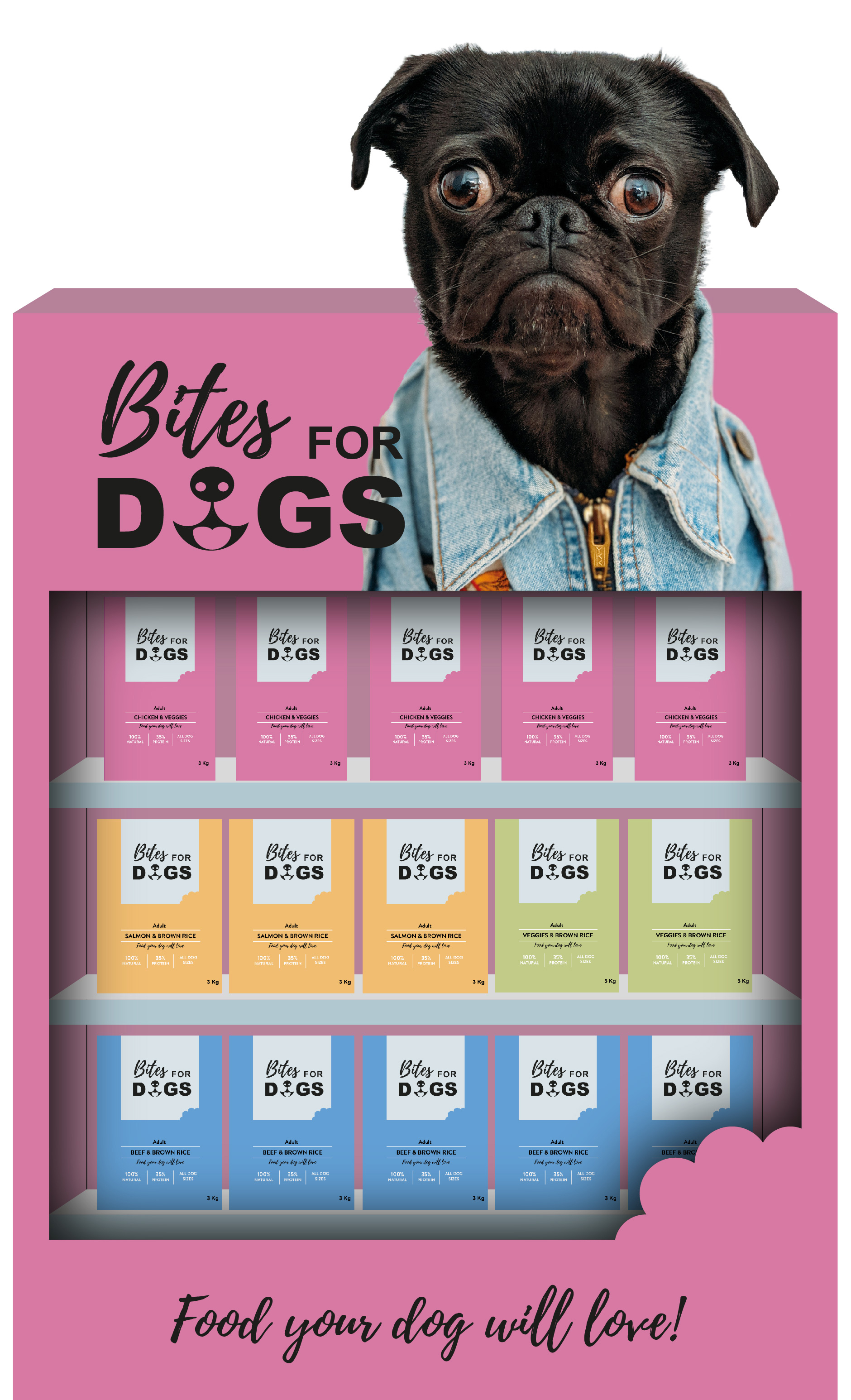
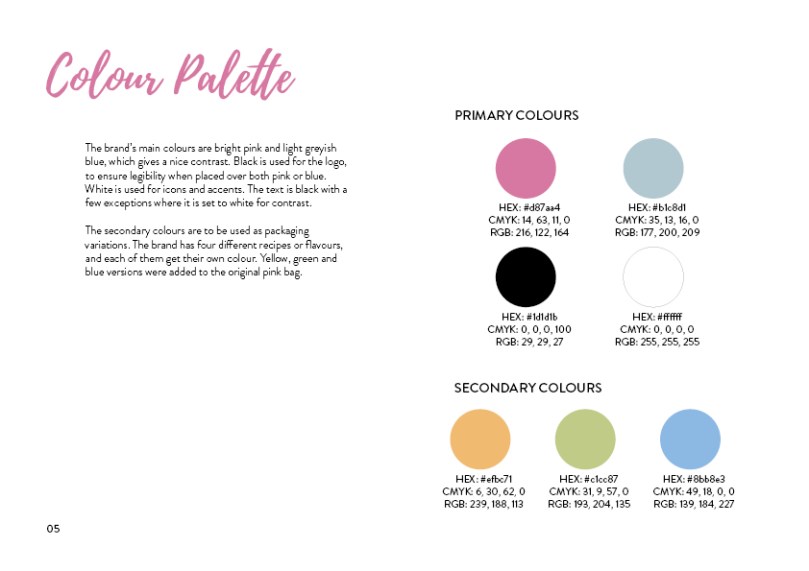
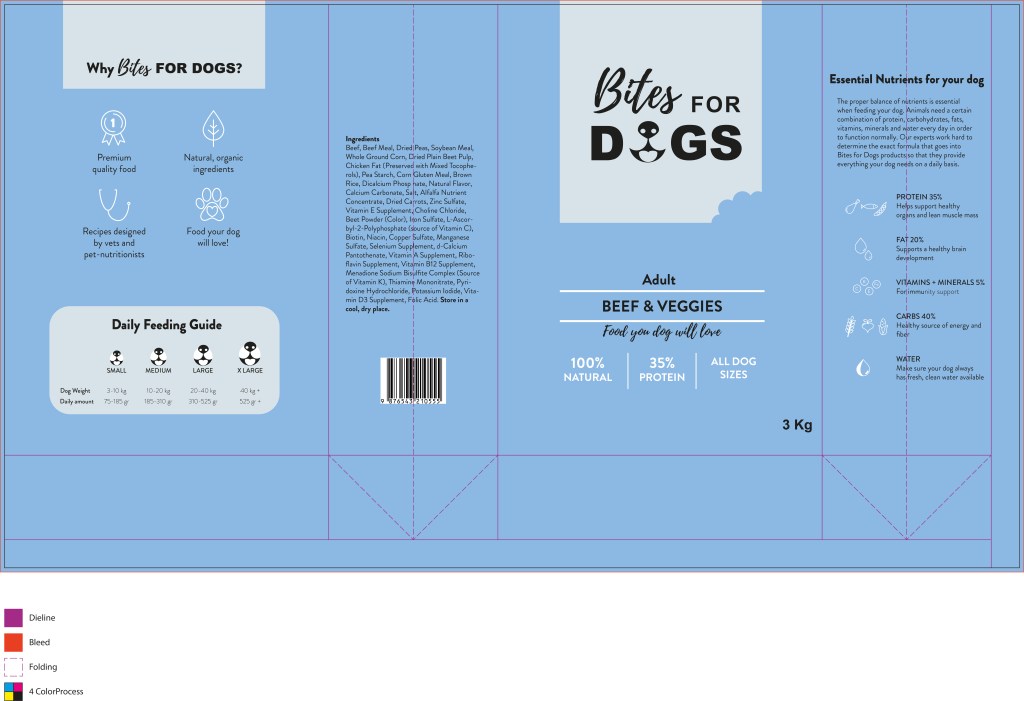
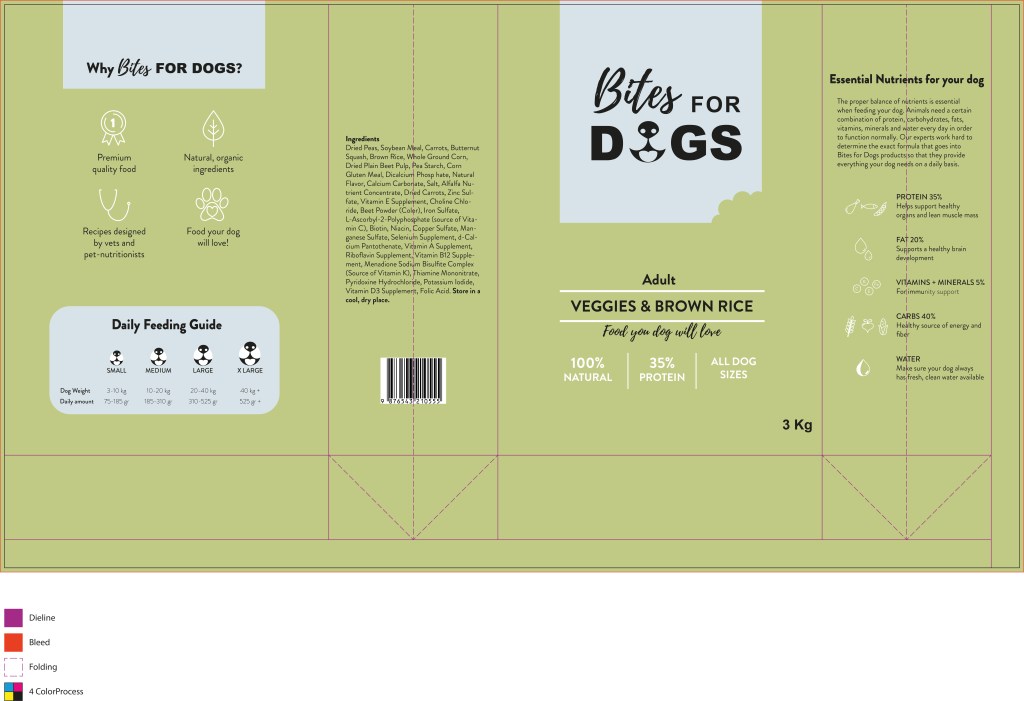
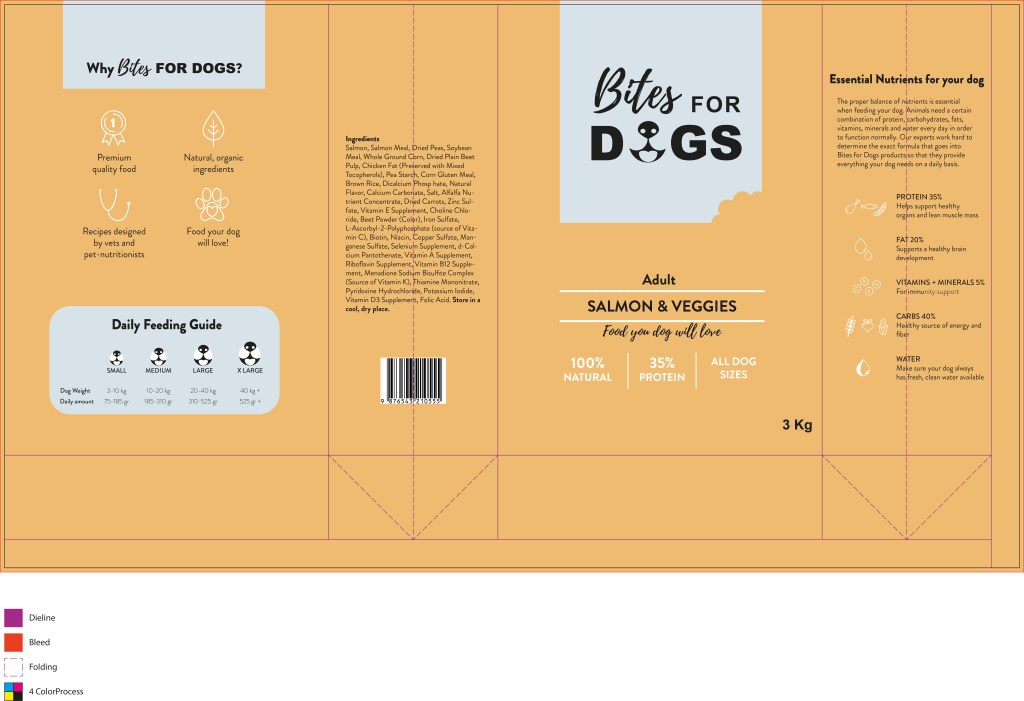
Then I moved to Illustrator and continued developing the design. I chose to use the same colours as in the brochure (photo below). I also experimented with other colours that could be used for different food recipes and/or dog ages. The colours I used are the same as in the brochure’s infographic (see pictures below).
Flat design
Colour variations for different recipes
4 – Presentation
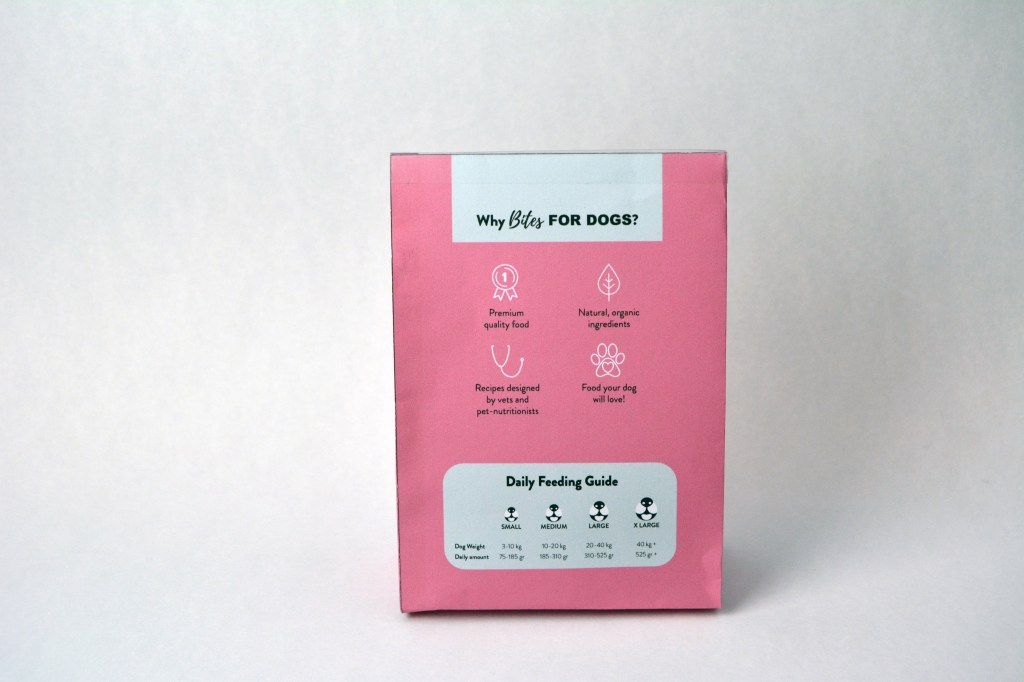
Below I added photos of my packaging sketches together with the brand products and close-ups of the packaging mock-up I created.
You are given a teaspoon as an object. Now apply each one of the SCAMPER techniques to it and give a brief explanation of what new product comes of this and how it can be marketed.
S – Substitute The first thing I thought of was to substitute the material or the color of the spoon, but then I thought it’d be better to replace the handle by a straw. This way, you can add sugar or other condiments to your drink, mix it and drink it, all with one item. It could be of interest for cafes and restaurants.
C – Combine I thought of combining the spoon with a fork at the other end of the handle. It could be marketed to people that take their lunch to school or work. It’s also useful when traveling or going out in nature. No more single-use plastic cutlery.
A – Adapt Making the spoon foldable makes it easier to carry it with you. If we combine this option with the previous one – spoon + fork – it’s an even better solution for portable cutlery.
M – Modify I modified one side of the bowl of the spoon to give it the shape of a serrated knife. It would be useful for eating certain fruits, like kiwi, without the need to peel it. It could be sold at any store where silverware is sold, or next to the fruit section at the supermarket.
P – Put to other uses Another use I came up with for any metal teaspoon is to roll up metal tubes in the kitchen, like those for mayonnaise or cream cheese.
E – Eliminate If we eliminate the bowl of the spoon, we are left with a stick to mix drinks. The advantage is that it takes less space to store than a regular teaspoon. It could be marketed to students or people who live in small apartments and need to save space. It’d probably be interesting for cafes and restaurants as well.
R – Reverse or rearrange it By linking the handle of the spoon to both sides of the bowl, we could use a simple spoon as a bracelet. It could be aimed at coffee/tea lovers and sold at cafes, for example.
Rice packaging
You have to design packaging for rice. The packaging has to be different from what is out there in the market. Apply each one of the SCAMPER techniques and do a write‑up on your findings. Then choose the option that you think would work best and do a sketch of what the packaging would look like.
S – Substitute The most obvious substitution would be to find a new material for the packaging. For example, glass, metal, fabric or even leaves (which would make it biodegradable and more eco-friendly).
C – Combine It would be easy to combine the rice with salt, spices and dried herbs to make the preparation easier as it eliminates the need to add them afterward.
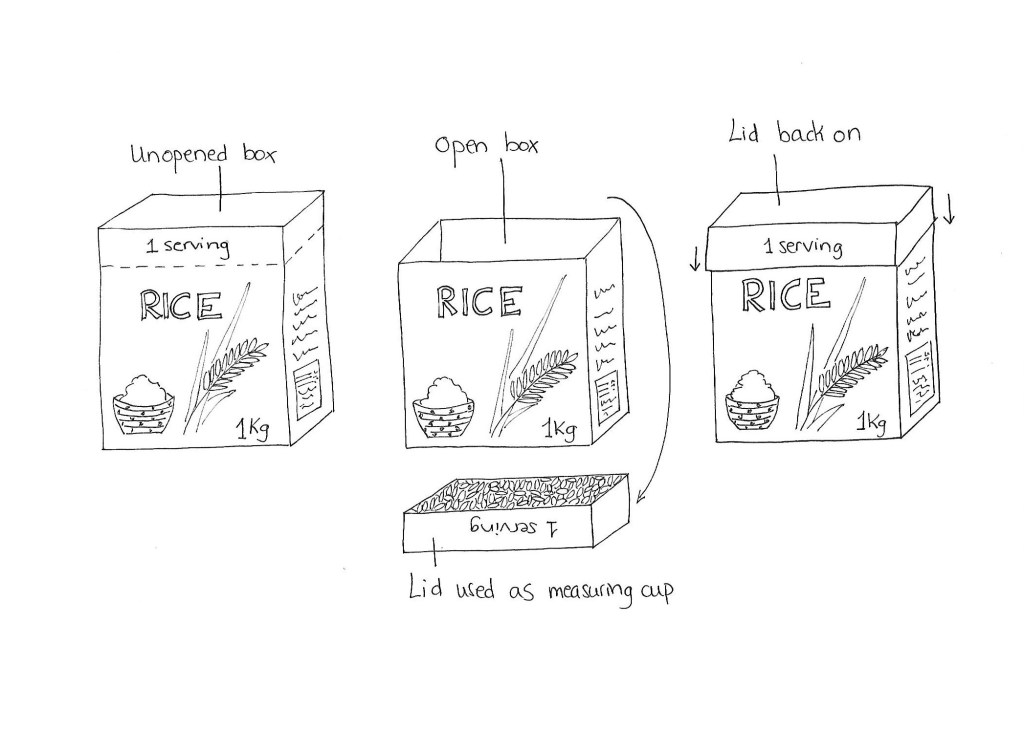
A – Adapt I usually cook too much or too little rice as I find it difficult to calculate the portions. One way to avoid this problem is to adapt the packaging to include a measuring cup. The top part of the cardboard box would detach from the rest of the box and could be used as a measuring tool. It would also work as a lid while storing the leftover uncooked rice.
M – Modify The package could be modified so it includes a dispenser that would release one serving of uncooked rice every time you push it. This would be useful in the same way as the option above.
P – Put to other uses The box could be made in such a way that it could be reused once the rice is finished. One application could be to store different products around the house or even to use as blocks for kids to play with.
E – Eliminate What if we eliminate the packaging altogether? We would be left with only rice, and the customers would need to buy it in bulk and bring their own container from home.
R – Reverse or rearrange it Usually, the rice packages are opened near the top. We could rearrange it and have the box open at the bottom part. If we combine this solution with the dispenser explained in the Modify section, we have a better solution.
Some of the ideas presented in this exercise already exist on the market. Adding a rice dispenser to the packaging would probably result in a price increase. The option of using part of the packaging as a measuring tool gives you the same results; however, it would be cheaper. For that reason is the design I picked. Here is the sketch.






 Mónica's Design Journey